
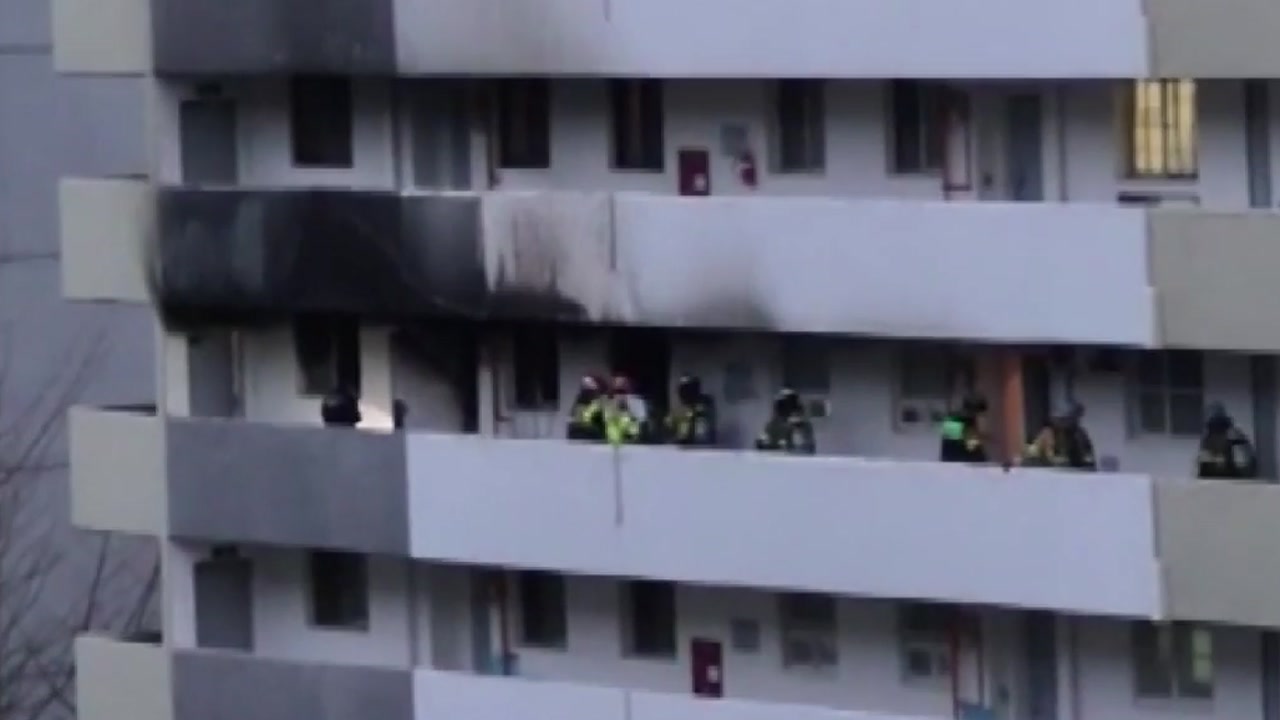
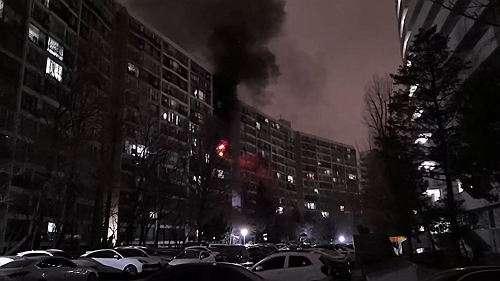
In the early morning of February 24, 2026, a major fire broke out
at Eunma Apartment in Daechi-dong, Gangnam-gu, Seoul,
resulting in the tragic death of one teenage girl
and injuries to three others.
The fire, which started on the 8th floor around 6:20 AM,
spread rapidly to nearby areas,
and fire authorities deployed 143 personnel and 41 pieces of equipment,
fully extinguishing the blaze in approximately 1 hour and 20 minutes.
This fire goes beyond a simple isolated incident,
once again bringing to the surface the structural problems
of limited firefighting infrastructure in the 47-year-old aging apartment
and double parking practices obstructing firefighting operations.
How the Fire Started and the Initial Response
At 6:20 AM that day, a fire of unknown origin
broke out in a unit on the 8th floor of Eunma Apartment.
Since it was in the early morning hours, most residents were asleep,
making delays in fire detection and evacuation inevitable.
Fire authorities dispatched immediately upon receiving the report,
but double-parked vehicles within the apartment complex
blocked the access roads, preventing fire trucks
from reaching the scene directly.
In the end, residents who arrived at the scene first
had to physically push the double-parked vehicles out of the way,
and precious initial firefighting time was lost in the process.
• 06:20 – Fire ignites in 8th floor unit
• 06:23 – 119 emergency call received
• 06:28 – Fire trucks arrive on scene, entry delayed by double parking
• ~06:35 – Residents push vehicles to clear access road
• 07:40 – Fire fully extinguished (143 personnel, 41 equipment units deployed)
Scale of Firefighting Response and Casualty Report
Fire authorities deployed a large-scale force of
143 personnel and 41 pieces of equipment
to suppress the fire.
Measures were taken to prevent the spread of fire
not only in the affected building but also to adjacent buildings,
and after approximately 1 hour and 20 minutes of firefighting,
the blaze was fully extinguished around 7:40 AM.
However, in the early stages of the fire,
a teenage girl living on the 8th floor
tragically lost her life after inhaling toxic fumes,
and three others on the same and adjacent floors
were injured from smoke inhalation and transported to hospitals.
| Category | Details |
| Deaths | 1 teenage girl (toxic fume inhalation) |
| Injuries | 3 persons (smoke inhalation, etc.) |
| Emergency Evacuees | Approximately 70 residents |
| Personnel Deployed | 143 |
| Equipment Deployed | 41 units |
| Time to Extinguish | Approximately 1 hour 20 minutes |
Approximately 70 residents living in the affected building
evacuated through emergency stairwells and the rooftop.
Many residents fled in their pajamas due to the early morning hour,
and some elderly residents reportedly faced significant difficulties
during the evacuation process.
Fire authorities and police are currently investigating
the exact cause of the fire.
47-Year-Old Eunma Apartment: The Limits of Aging Fire Safety Infrastructure
Eunma Apartment was completed in 1979
and is now 47 years old, making it a representative aging large-scale apartment complex.
This 4,424-unit complex has long been considered
a symbol of Gangnam redevelopment,
but decades of delayed reconstruction
have left the buildings in a seriously deteriorated state.
From a fire safety infrastructure perspective in particular,
the fire protection systems installed according to the standards at the time of construction
fall far short of current fire safety requirements.
• No sprinkler system installed – Not mandatory at the time of 1979 construction
• No designated fire truck access zones – Complex design does not accommodate modern fire truck specifications
• Outdated emergency alarm systems – Concerns over delayed fire detection and alert transmission
• Narrow evacuation routes – Corridor and stairway widths fall short of current standards
• Aging gas pipes and electrical wiring – Elevated fire risk conditions
Once reconstruction is completed, modern fire safety standards
would allow for the installation of sprinklers,
automatic fire detection systems, and evacuation guidance systems,
but various regulations and conflicting interests
have continued to push back the reconstruction timeline.
In the meantime, residents remain exposed to various risks
including fire, water leaks, and structural safety concerns,
and this fire is a case where those risks became reality.
Double Parking: A Chronic Problem That Devours the Golden Time for Firefighting
The most controversial aspect of this fire was
the delay in fire truck access caused by double parking.
Eunma Apartment is known to have severely insufficient
parking space for its 4,424 units,
and double parking has become routine during nighttime hours.
In the early morning hours of this incident as well,
double-parked vehicles lined the main roads within the complex,
leaving fire trucks stranded at the complex entrance.
In the urgent situation, residents had to step in themselves
to shift vehicles into neutral and push them aside,
wasting several precious minutes in the process.

| Category | Details |
| Firefighting Golden Time | Within 5 minutes of fire outbreak |
| Delay Due to Double Parking | Estimated 7–10 minutes |
| Double Parking Rate in Aging Apartments Nationwide | Estimated average of 60–70% |
| Fine for Fire Truck Zone Violations | Up to 1 million won |
The golden time for fire suppression is generally known to be
within 5 minutes of ignition.
Fire trucks must arrive on scene and begin spraying water
within this window to minimize damage,
but when access is blocked by double parking,
the golden time becomes effectively meaningless.
The double parking rate in aging apartment complexes nationwide
is estimated at 60–70%,
meaning the same tragedy could repeat itself
at any apartment complex in South Korea.
Fire Truck Access Zone Law: An Ineffective System Exposed
Since 2018, the government has amended the Framework Act on Fire Services
to mandate designated fire truck access zones within apartment complexes.
Parking in fire truck access zones carries
a fine of up to 1 million won,
and criminal penalties are possible for obstructing firefighting operations.
However, in practice, this law is not functioning properly.
In aging apartments where parking space is critically insufficient,
fire truck access zones are perceived as "empty spaces"
and are frequently occupied by vehicles during nighttime hours.
Due to a shortage of enforcement personnel and concerns over conflicts among residents,
active intervention by building management offices is also difficult,
and the number of fines issued is known to be
extremely low compared to the actual extent of violations.
– Eunma Apartment resident
Experts point out that penalties at the fine level
are insufficient to change parking culture,
and emphasize that physical access barriers,
higher fines, and fundamentally,
expansion of parking spaces must be pursued simultaneously.
Fire Prevention in Aging Apartment Complexes: What Are the Institutional Challenges?
The Eunma Apartment fire is not an isolated incident
but a cross-section of the complex risks inherent in aging apartment complexes.
Across the country, apartments over 30 years old
number in the hundreds of thousands of units,
and most of them have facilities that fall short
of current fire safety standards.
Unless reconstruction or remodeling takes place,
this problem will only worsen over time.
1. Mandatory Modernization of Fire Safety Facilities
– Mandatory installation of sprinklers and automatic fire detection systems in apartments over 30 years old
– Government subsidies and low-interest loans to ease the cost burden
2. Strengthening Effectiveness of Fire Truck Access Road Enforcement
– Significant increase in double parking fines (from current 1 million won to 3 million won or more)
– Mandatory installation of physical barriers for fire truck access zones
– Introduction of CCTV-based unmanned enforcement systems
3. Upgrading Evacuation Systems
– Support for replacing emergency broadcast equipment in aging apartments
– Application of current standards for floor-by-floor evacuation guide lights and evacuation maps
– Development of separate evacuation manuals for the elderly and mobility-impaired
4. Linking Reconstruction and Remodeling with Safety Standards
– Mandatory temporary fire safety facility reinforcement for complexes with delayed reconstruction
– Establishment of a system prioritizing fire safety infrastructure in remodeling projects
Especially for complexes like Eunma Apartment where reconstruction has been delayed for an extended period,
rather than waiting until reconstruction is complete,
proactive safety measures that are feasible at this point must be implemented.
Simplified sprinkler installation, distribution of standalone alarm detectors in individual units,
and replacement of aging electrical wiring
are matters that can be pursued immediately regardless of reconstruction status.
A Societal Wake-Up Call to End the Cycle of Tragedy
The government and local authorities must ensure the safety
of aging apartment residents through budget support and institutional reform,
and residents themselves must also participate in everyday safety practices
such as refraining from double parking and joining fire drills.
The Eunma Apartment fire is not just a Gangnam problem
but a risk shared by hundreds of thousands of aging apartment complexes nationwide.
Expecting 2026 safety standards from a building constructed in 1979
was an unreasonable expectation from the start,
and bridging that gap is the responsibility of institutions and policies.
To ensure that this tragedy, which claimed one precious life,
does not end as yet another forgotten disaster,
a fundamental review and substantive improvement
of fire safety in aging apartments must be carried out without fail.