
On February 24, 2026, at the National Assembly plenary session,
the arrest consent motion for independent lawmaker Kang Sun-woo was passed.
Regarding the arrest warrant requested by prosecutors on charges of
'receiving 100 million won in exchange for party nomination,'
263 out of 296 registered members attended and voted, resulting in
164 votes in favor, 87 against, 3 abstentions, and 9 invalid votes,
passing the arrest consent motion.
The passage of an arrest consent motion for a sitting lawmaker
is once again bringing to the surface not only the complex political calculations within the National Assembly,
but also the fundamental question of transparency in the party nomination system.
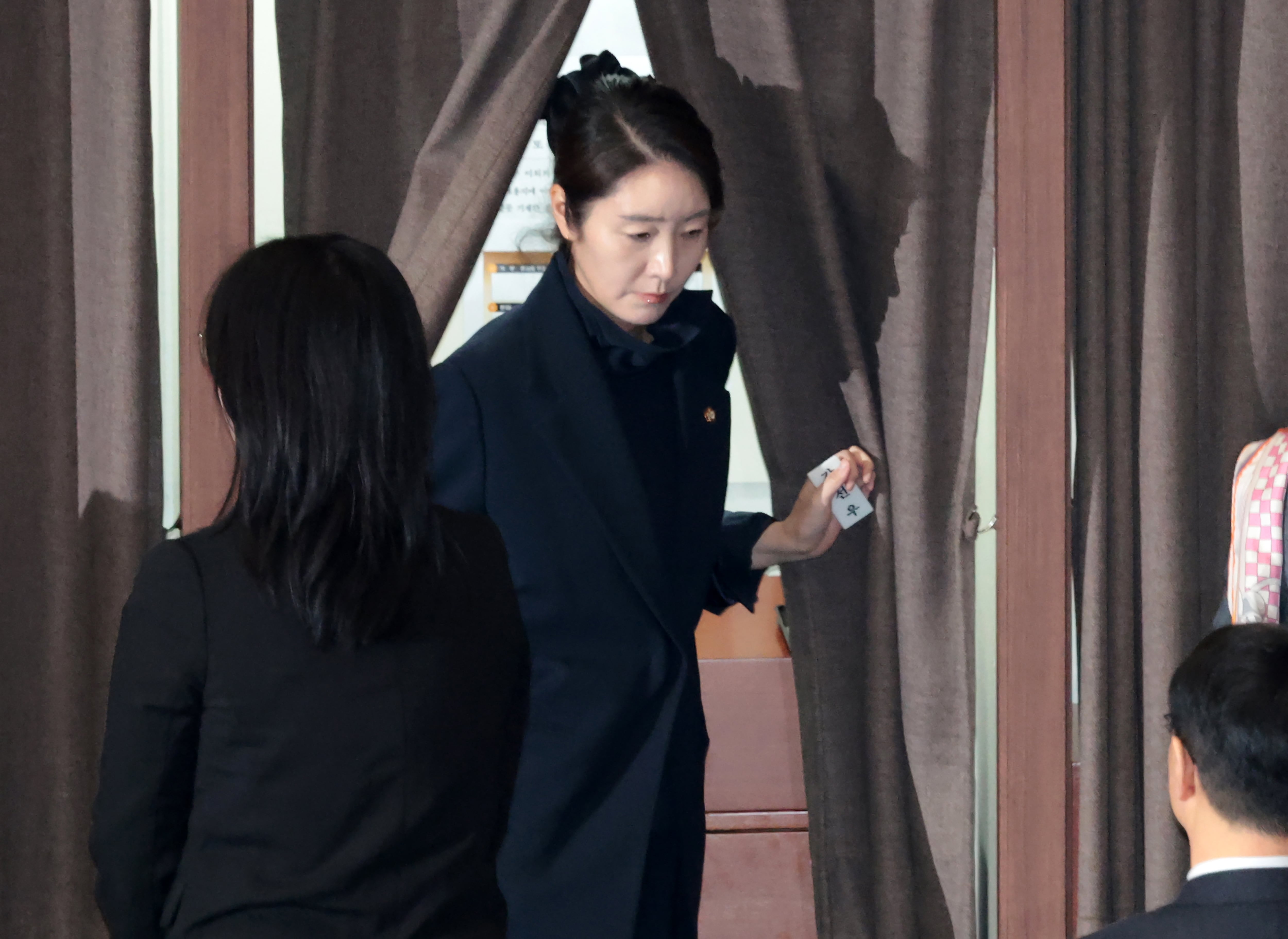
Origin of the Case — The 2022 Local Election Nomination and 100 Million Won
The core of the charges against Rep. Kang Sun-woo involves
the acceptance of money during the 2022 local election nomination process.
According to prosecutors, Rep. Kang was a member of the Democratic Party of Korea at the time
and was in a position to decide nominations for Seoul Metropolitan Council candidates,
and is suspected of having received
100 million won in exchange for a nomination from former Seoul Metropolitan Council member Kim Kyung.
The allegations were reportedly uncovered through internal tips
from investigative agencies and statements from related individuals,
and prosecutors secured financial transaction records and related evidence
before requesting an arrest warrant for Rep. Kang from the court.
Due to the legislative immunity of sitting National Assembly members,
the National Assembly's consent for arrest was required prior to the court issuing the warrant,
and accordingly, the arrest consent motion was brought to the plenary session.
• Charges: Accepting money in exchange for party nomination (100 million won)
• Timing: During the 2022 local election nomination process
• Provider of funds: Former Seoul Metropolitan Council member Kim Kyung
• Basis of investigation: Internal tips, statements from related individuals, financial transaction records
• Applicable laws: Violation of the Political Funds Act, etc.
164 Votes in Favor: What the Vote Results Reveal About Both Parties' Calculations
The most noteworthy aspect of this vote is
the political calculations revealed in the voting behavior of both ruling and opposition parties.
Of the 296 registered members, 263 attended while 33 were absent,
and among those present, there were 87 votes against, 3 abstentions, and 9 invalid votes.
The 164 votes in favor represent approximately 62.4% of attending members,
surpassing the majority but hardly constituting an overwhelming endorsement.
| Category | Count (Votes) | Percentage |
| Registered Members | 296 | - |
| Present | 263 | 88.9% |
| In Favor | 164 | 62.4% |
| Against | 87 | 33.1% |
| Abstentions | 3 | 1.1% |
| Invalid | 9 | 3.4% |
Since Rep. Kang had already left the Democratic Party and was an independent,
the opposition had little political incentive to provide 'party-level protection.'
Meanwhile, within the ruling Democratic Party of Korea,
there appears to have been a willingness to take a firm stance against nomination corruption allegations,
and the party leadership is interpreted as having effectively thrown its weight behind the passage of the arrest consent motion.
However, the 87 votes against is a significant number,
demonstrating that principled arguments for respecting the purpose of legislative immunity
and wariness about the political motivations behind prosecutorial investigations
still exist within the National Assembly.
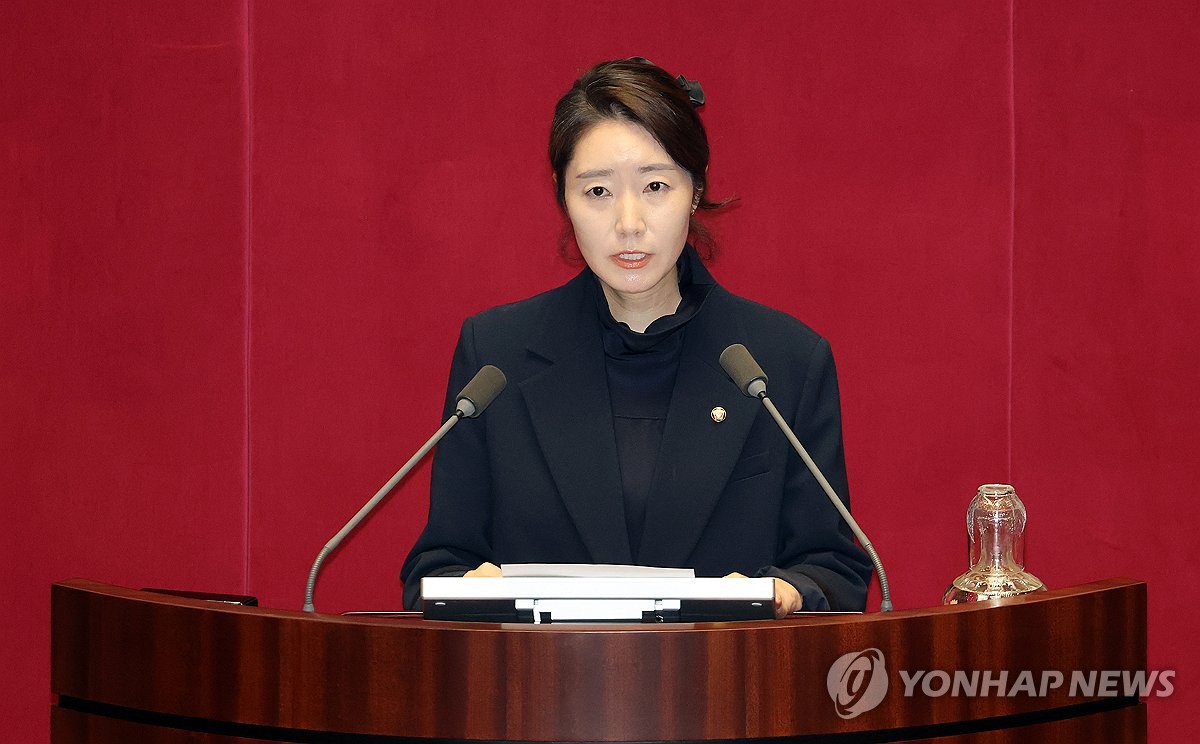
Rep. Kang Sun-woo's Personal Statement — A Plea of "Injustice"
Prior to the vote, Rep. Kang Sun-woo delivered a personal statement at the plenary session.
Having already left the Democratic Party and become an independent, Rep. Kang
strongly asserted her innocence and appealed to her fellow lawmakers.
In her statement, Rep. Kang explained that the bribery allegations
differ from the actual facts, and that the related evidence had been distorted.
In particular, she attempted to prove her innocence
by providing detailed explanations about her role and the scope of her authority in the nomination process,
as well as her relationship with former council member Kim Kyung.
The personal statement delivered from the isolated position of an independent
laid bare the difficulty of having to present one's case
on the stage of the National Assembly without any organizational support from a party.
After the Arrest Consent Motion — Procedures Leading to the Warrant Review
The passage of the arrest consent motion by the National Assembly
does not mean that Rep. Kang will be taken into custody immediately.
After the passage of the arrest consent motion, prosecutors will either re-file the arrest warrant with the court
or request the court to review the already-filed warrant.
The court will conduct a pre-arrest suspect examination (warrant review hearing),
during which the judge will meet the suspect in person
to assess the necessity of detention and the degree to which the charges are substantiated.
Typically, a warrant review hearing is held
within several days after the passage of an arrest consent motion,
and the hearing is expected to take place as early as this week.
① National Assembly passes arrest consent motion (Feb. 24, 2026)
② Prosecutors request the court to execute the arrest warrant
③ Court schedules a pre-arrest suspect examination (warrant review hearing)
④ Judge decides whether to issue the warrant after examining the suspect
⑤ If warrant is issued → Investigation under custody / If rejected → Investigation without custody
Comparison with Past Cases of Arrest Consent Motions for Lawmakers
In South Korea's constitutional history,
cases where arrest consent motions for lawmakers passed the plenary session are not very common.
Legislative immunity, as stipulated in Article 44 of the Constitution,
is an institutional safeguard to ensure lawmakers can perform their duties
and is intended to protect them from political persecution.
For this reason, the National Assembly has historically taken
a considerably conservative stance toward arrest consent motions,
and there have been quite a few cases where they were rejected.
| Year | Subject | Charges | Result |
| 2015 | Rep. Lee Wan-young | Bribery | Passed |
| 2019 | Rep. Lee Eun-hae | Fraud | Rejected |
| 2023 | Chair Lee Jae-myung | Multiple charges | Rejected |
| 2026 | Rep. Kang Sun-woo | Nomination bribery | Passed |
In the case of Rep. Kang Sun-woo,
the prevailing analysis is that her political isolation as an independent
was the decisive factor in the motion's passage.
Compared to the case where the arrest consent motion for then-party chair Lee Jae-myung was rejected,
this confirms the reality that the fate of an arrest consent motion
largely depends on whether or not there is organizational protection from a major party.
The Lee Jae-myung Administration and the Political Implications of Nomination Corruption Investigations
This case is also being interpreted as a signal that investigations into
nomination corruption are intensifying since the launch of the Lee Jae-myung administration.
The fact that prosecutors are actively investigating
allegations of money exchanged during the nomination process for a sitting lawmaker
and have even requested an arrest warrant
is creating considerable tension across the political landscape.
For the ruling Democratic Party of Korea in particular,
the political burden is significant given that the nomination corruption investigation
is targeting individuals who originated from the party.
Even though Rep. Kang had already left the party to become an independent,
she was a member of the Democratic Party at the time of the nomination,
and since the incident occurred within the party's nomination system,
questions of the party's moral responsibility are inevitable.
On the other hand, the opposition is expected to continuously raise questions
about whether this investigation constitutes politically neutral and appropriate law enforcement,
or whether it is a selective investigation with political motivations.
• Ruling party (Democratic Party): Pressure to reform nomination system, triggering internal reform discussions
• Opposition: Monitoring political neutrality of prosecutorial investigations, strengthening oversight
• Prosecution: Signal of expanded nomination corruption investigations, possibility of further probes
• Public opinion: Continued demand for strict punishment of political corruption
Party Nomination System: Challenges for Ensuring Transparency
The essence of this case goes beyond the corruption allegations of a single lawmaker,
shining a light on the structural problems of South Korea's party nomination system.
The current nomination system grants considerable discretion
to party leadership and nomination review committees,
and there have been persistent criticisms that this process
leaves room for money to change hands or decisions to be made in favor of specific individuals.
The closed-door nature of nominations and the opaque decision-making structure
are not problems unique to this case alone.
Corruption allegations related to nominations have repeatedly surfaced
across multiple past elections,
and this remains one of the key factors deepening public distrust in politics.
| Challenge | Current System | Direction for Improvement |
| Nomination Review Process | Closed-door review | Mandatory disclosure of review criteria and results |
| Prevention of Bribery | Post-incident punishment focused | Introduction of financial monitoring system during nominations |
| Voter Participation | Limited primaries | Expansion of full open primaries |
| External Oversight | Internal self-regulation | Establishment of independent nomination oversight committee |
Experts point out that to ensure transparency in the nomination process,
it is necessary to strengthen the independence of nomination review committees,
disclose review criteria in advance,
and substantially expand the open primary system.
There are also growing calls for discussions on
increasing penalties for financial transactions related to nominations
and strengthening monitoring systems.
Future Developments and Key Points to Watch
The passage of the arrest consent motion for Rep. Kang Sun-woo
is not the end of the matter but the beginning of a new phase.
The first thing to watch is
the result of the court's warrant review hearing.
Even though the National Assembly has consented to the arrest,
the court can still reject the warrant
if it does not recognize the necessity of detention,
in which case the trial would proceed without custody.
Additionally, whether this investigation will be limited to Rep. Kang alone
or expand into a broader investigation
of the entire nomination system
is something the political world is closely monitoring.
Depending on the results of further investigations
into related individuals including former council member Kim Kyung,
there remains the possibility that the scale of the case
and its political repercussions could grow even larger.
For voters, this case serves as
an important opportunity to examine the scope of legal accountability for elected officials,
the appropriateness of the legislative immunity system,
and the health of party democracy.
① Court warrant review hearing result (detention vs. rejection)
② Whether prosecutors expand nomination corruption investigations
③ Progress of ruling party's nomination system reform discussions
④ Results of further investigations into related individuals (former council member Kim Kyung, etc.)
⑤ Warning effect on the broader political landscape