In February 2026, the hashtag '#SEAbling' exploded across Southeast Asia,
setting off an unprecedented alarm for the Hallyu (Korean Wave) industry.
What began as a minor friction between Korean and local fans at a
K-POP group DAY6 concert in Kuala Lumpur, Malaysia,
was amplified through social media and escalated into a region-wide
anti-Korean boycott movement across Southeast Asia,
laying bare the structural vulnerabilities of the Hallyu industry.
Let us examine in detail how a simple fandom dispute
escalated into an international issue threatening
the multi-billion-dollar Hallyu consumer market.
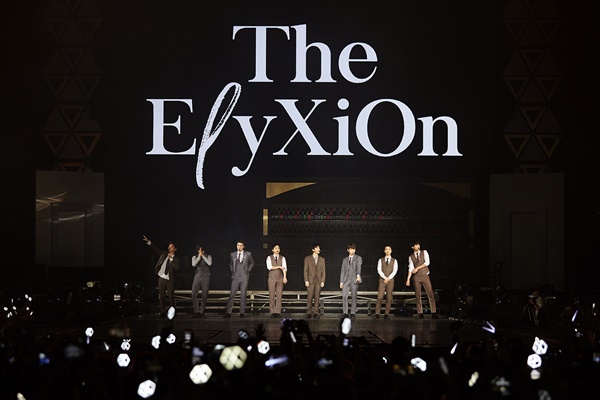
DAY6 Malaysia Concert: The Telephoto Lens Camera That Lit the Fuse
The incident originated on January 31, 2026,
at the DAY6 concert held at Axiata Arena in Kuala Lumpur.
The venue had strictly announced in advance that DSLR cameras
and telephoto lens-equipped photography equipment were prohibited.
However, some Korean "homma" (home masters, fan site operators)
smuggled in professional photography equipment and attempted to film,
only to be stopped by local security personnel.
During this incident, a local Malaysian audience member filmed
the rule violation and posted a video on X (formerly Twitter)
that revealed the Korean fan's face,
and the video quickly spread, sparking a war of words between the two fandoms.
Korean fans protested that filming and posting the person's face
without consent was a violation of privacy,
while Malaysian fans pointed out the clear violation of venue rules
and countered that the attitude of disregarding local regulations was the real problem.
Both sides posted apologies, and the incident appeared to be settling down,
but when some members of Korean online communities reacted with
"the Malaysian fans overreacted,"
the conflict entered an escalation phase instead.
• Date: January 31, 2026, Axiata Arena, Kuala Lumpur
• Origin: Korean homma smuggling in a banned telephoto lens camera and attempting to film
• Trigger: Malaysian fan filming the scene and posting it on X
• Issue: Venue rule violation vs. privacy rights dispute
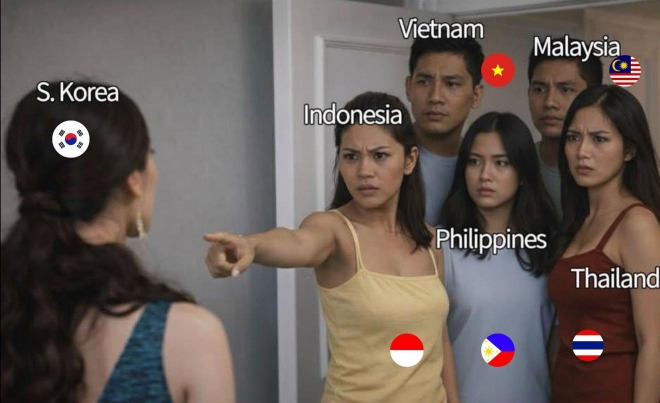
The 'SEAbling' Solidarity That Exploded on X and TikTok: Organizing the Boycott
'SEAbling' is a portmanteau combining 'SEA,' the abbreviation for
Southeast Asia, and 'sibling,' meaning brothers and sisters.
It carries the meaning of Southeast Asian nations uniting as one family,
with netizens from multiple countries including Malaysia, Indonesia,
Thailand, Vietnam, and the Philippines rallying around this hashtag.
Spreading primarily on X and TikTok, this movement evolved
beyond a simple hashtag campaign into a stage where
specific boycott targets were being named.
Samsung smartphones, Olive Young cosmetics, Korean dramas, and K-POP music streaming
were among the major boycott targets cited,
and posts urging "Don't buy Korean products" and
"Stop consuming K-POP and Korean dramas"
were shared in the tens of thousands.
In Indonesia in particular, major outlets such as the Jakarta Post
and Tempo began covering the boycott movement in earnest,
elevating the online campaign into a full-blown social discourse.
| Boycott Target | Category | Proposed Alternative |
| Samsung Electronics | Smartphones, Appliances | Local brands and Chinese alternatives |
| Olive Young | K-Beauty Cosmetics | Japanese and Thai local beauty brands |
| K-POP | Music Streaming, Album Purchases | Support domestic artists |
| Korean Dramas | OTT Viewing (Netflix, etc.) | Watch Thai and Japanese dramas |
| Korean Tourism | Travel to Korea | Alternative destinations like Japan and Taiwan |
Insults to Independence Activists and Racism: Emotions Pushed to the Extreme
The decisive turning point that elevated this incident beyond a simple fandom dispute
into an emotional confrontation between nations
was the flood of extreme hate posts from both sides.
Some Korean netizens posted images comparing Southeast Asian women to orangutans,
and the post racked up a staggering 83 million views on X.
Remarks denigrating the economic strength and living standards of Southeast Asian countries
and supremacist comments such as "You live off Korean money" poured in,
fueling extreme anger among Southeast Asian netizens.
In response, some Southeast Asian netizens also crossed the line.
They posted photos of Korean independence activists in a mocking context
and used images related to Japanese comfort women victims in an insulting manner,
touching on the most sensitive historical wounds for Koreans.
These extreme posts were condemned by both sides,
yet amid the already heightened emotions,
a vicious cycle formed where the logic of
"the other side crossed the line first" was used to justify retaliatory hate.
which in turn provokes even stronger hate speech in a repeating vicious cycle."
— Korea Herald, February 2026
Analysis of the Vicious Cycle of Emotional Confrontation
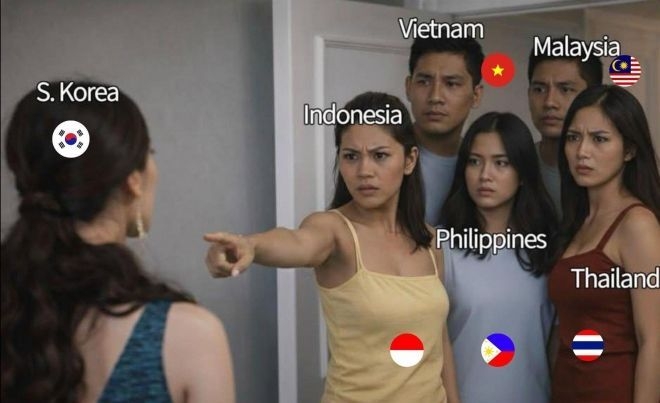
This Korea-Southeast Asia online conflict displays a textbook
pattern of emotional escalation.
In Stage 1, the conflict began as a concert etiquette dispute between specific fans.
In Stage 2, it expanded into a nation-versus-nation framework of Korea vs. Malaysia.
In Stage 3, solidarity spread across all of Southeast Asia, giving birth to the '#SEAbling' movement.
In Stage 4, the conflict peaked with extreme hate speech
including racism and historical desecration,
and in Stage 5, it transitioned into economic action in the form of a boycott.
What is particularly noteworthy is the role of social media algorithms.
The recommendation algorithms of X and TikTok are structured to
expose sensational content with high view counts and engagement to more users,
resulting in extreme posts from both sides spreading
far faster and wider than moderate opinions.
The Korea Herald analyzed this situation as
"long-buried racial tensions surfacing,"
pointing out that this was not a simple fandom clash but rather
the simultaneous eruption of cultural asymmetry and accumulated emotions
built up during Hallyu's rapid expansion.
| Stage | Pattern | Key Actions |
| Stage 1 | Fan vs. Fan | Concert rule violation dispute |
| Stage 2 | Korea vs. Malaysia | Mutual criticism between netizens of both nations |
| Stage 3 | Korea vs. All of Southeast Asia | #SEAbling solidarity formed |
| Stage 4 | Extreme Hate Speech | Racism and historical desecration |
| Stage 5 | Economic Action | Korean brand boycott |
Comparison with Past Boycotts: How Did the 2019 No Japan Movement Unfold?
To gauge the impact of the SEAbling boycott,
it is worth comparing it with notable past boycott movements.
The most direct comparison is Korea's 2019 'No Japan' boycott.
When the Japanese government imposed export restrictions on key semiconductor materials to Korea,
Korean consumers spontaneously launched a boycott of Japanese products.
According to Realmeter polling, the participation rate reached 62.8%,
and Uniqlo's Korean sales plummeted from 97.4 billion won in 2019
to 62.9 billion won in 2020, a decline of approximately 35%.
The number of Korean tourists visiting Japan also dropped by about 10%,
inflicting tangible economic damage.
However, the No Japan movement was driven by a clear political motive —
a government-to-government trade dispute —
and enjoyed broad national consensus,
whereas the SEAbling movement originated from an emotional civilian-level conflict,
making them different in nature.
Furthermore, the No Japan movement also gradually weakened over time,
with Japanese brand sales in Korea eventually recovering.
Considering this precedent, the SEAbling boycott may also
struggle to sustain itself long-term,
but the fact that a multinational solidarity across Southeast Asia has formed
means its potential impact cannot be dismissed
as equivalent to a single-country boycott.
| Category | 2019 No Japan (Korea → Japan) | 2026 SEAbling (Southeast Asia → Korea) |
| Trigger | Japanese export restrictions (government dispute) | K-POP fan conflict (civilian emotional clash) |
| Scope of Participation | Single country (Korea) | Multi-country Southeast Asian solidarity |
| Participation Rate | 62.8% (polling) | Online-driven, no verified figures |
| Main Platforms | Domestic communities, KakaoTalk | X, TikTok, Facebook |
| Key Industries Hit | Uniqlo, Japanese beer, Tourism | Samsung, K-Beauty, K-POP, Tourism |
Southeast Asia Is Hallyu's Largest Consumer Market: How Significant Will the Real Impact Be?
To analyze the impact of this incident on the Hallyu industry,
we must first understand the share Southeast Asia holds in the Hallyu ecosystem.
With a population of approximately 700 million, Southeast Asia
is a core consumer market for K-POP, K-Drama, and K-Beauty.
In the K-Beauty sector, Southeast Asia has been the top priority
for market diversification strategies aimed at reducing dependence on China,
and Cosmax's Thai subsidiary recorded a 35% revenue growth rate as of 2024.
In Korean tourism as well, the Southeast Asian region has shown
a steady increase in visitors to Korea, driven by the expansion of LCC (low-cost carrier) routes.
In 2024, approximately 16.37 million foreign tourists visited Korea,
with Southeast Asian tourists accounting for a significant share
of tourism, shopping, and food and beverage spending,
primarily as free independent travelers (FIT).
The stature of Southeast Asia in the K-POP concert market is even more absolute.
Bangkok, Jakarta, Manila, and Kuala Lumpur are essential stops
on world tours by Hallyu idol groups,
and the ticket purchasing power and merchandise spending of local fandoms
account for a substantial portion of Korean entertainment agency revenues.
• Southeast Asian population: Approximately 700 million (world's 3rd largest population bloc)
• K-Beauty export growth: Double-digit revenue increases at Southeast Asian subsidiaries (as of 2024)
• Inbound tourism to Korea: Approximately 16.37 million in 2024, with Southeast Asia's share steadily expanding
• K-POP concerts: Southeast Asian cities such as Bangkok, Jakarta, and Manila are essential world tour stops
That said, a careful assessment is needed regarding whether
the SEAbling boycott will inflict immediately fatal damage
on the Hallyu industry.
A significant gap exists between online hashtag participation
and actual changes in consumer behavior.
During the 2019 No Japan movement as well, the initially strong boycott stance
gradually softened over time.
However, the warning from Asia Economy that this situation could become
"K-Arrogance that throws cold water on 30 years of Hallyu achievements"
should be taken seriously.
Even if the short-term impact on sales is limited,
if the perception that "Koreans look down on Southeast Asia" becomes entrenched long-term,
the brand favorability in Southeast Asia — Hallyu's key growth engine —
risks being damaged beyond recovery.
Constructive Approaches to De-escalating the Conflict
This incident clearly demonstrates that Hallyu can no longer
rest on a one-directional cultural export model.
A multi-layered approach is needed to de-escalate the conflict
and restore healthy cultural exchange.
First, proactive responses from K-POP agencies and the concert industry are required.
They must clearly communicate fan guidelines regarding compliance with local regulations
during overseas concerts and establish specific operational manuals
to prevent friction with local audiences unfamiliar with the homma culture.
Second, strengthening mutually respectful narratives in Hallyu content is necessary.
A shift in perspective is needed to view Southeast Asia
not merely as a consumer market but as an equal cultural partner,
along with practical expansion of mutual exchange such as
collaborations with local artists and content production that respects local cultures.
In fact, the rise of Indonesian girl group NO:NA, which garnered significant
attention on social media amid this incident,
suggests that demand for Southeast Asia's own cultural content is growing.
Third, self-policing efforts by netizens on both sides are paramount.
Racist posts and content desecrating history
cannot be justified under any circumstances,
and both sides must recognize that extreme statements by a few
do not represent the voices of the majority of well-intentioned fans.
Fourth, cultural diplomacy at the government and public institution level should also be considered.
Organizations such as the Korea Foundation and Korea Tourism Organization
should strengthen cultural exchange programs in Southeast Asia
and expand opportunities for direct interaction between young people of both sides,
making efforts to offset the negative perceptions formed online through offline engagement.
1. K-POP agencies should strengthen manuals for compliance with local regulations at overseas concerts
2. Shift Hallyu content strategy to recognize Southeast Asia as an equal cultural partner
3. Community self-policing efforts against extreme hate speech on both sides
4. Expansion of government and public institution-level cultural diplomacy programs for Southeast Asia
The Sustainability of Hallyu Begins with Cultural Humility
The small friction that began at a DAY6 concert spreading into anti-Korean sentiment across Southeast Asia
has brought to the surface fundamental challenges that the Hallyu industry has long overlooked.
K-POP, K-Drama, and K-Beauty — the pillars of Hallyu —
have enjoyed remarkable growth over the past several decades,
but respect and understanding toward the overseas consumers
who sustain that growth have not kept pace.
With approximately 700 million people, Southeast Asia is
one of the most critical markets that will determine Hallyu's future growth.
Whether this SEAbling incident ends as a temporary emotional outburst
or becomes entrenched as long-term anti-Korean sentiment,
the lesson that the Hallyu industry and Korean society must draw from it is clear.
The status of a cultural exporting nation cannot be maintained
by economic achievements alone;
it can only be sustainable when backed by genuine respect
for consumers and cultural humility.
Facing the lesson that a handful of hateful posts
can instantly demolish decades of cultural trust,
what is most needed now is for both sides to open the door
to constructive dialogue rather than emotional responses.